


PTE Summarize Written Text
Guida completa e consigli per PTE Summarize Written Text (Academic, UKVI & Core)
Una parte fondamentale del Pearson Test of English è il compito "Summarize Written Text" nella sezione Writing. Questa domanda del test di pratica PTE verifica quanto bene comprendi un brano, ne individui le idee principali e le presenti chiaramente in un'unica frase. Valuta anche la tua grammatica, la comprensione in reading e le competenze di writing, tutte importanti per migliorare il tuo punteggio complessivo PTE.


PTE Summarize Written Text: che cos'è questo compito?
In questo compito degli esami PTE Academic e UKVI ti verrà dato un brano o un tipo di discussione. Verifica la tua comprensione in reading e la tua accuratezza in writing. Nei 10 minuti a disposizione devi riassumerlo in modo efficace in un'unica riga di 5-75 parole.
Nota: Per il PTE Core puoi scrivere più di una riga e il limite di parole è da 25 a 50. Il tempo resta lo stesso (10 minuti). Puoi usare più di una frase.
Ti verrà mostrata l'immagine qui sotto e, quando qualcuno fa clic sull'icona di riproduzione, il video sottostante si avvia.
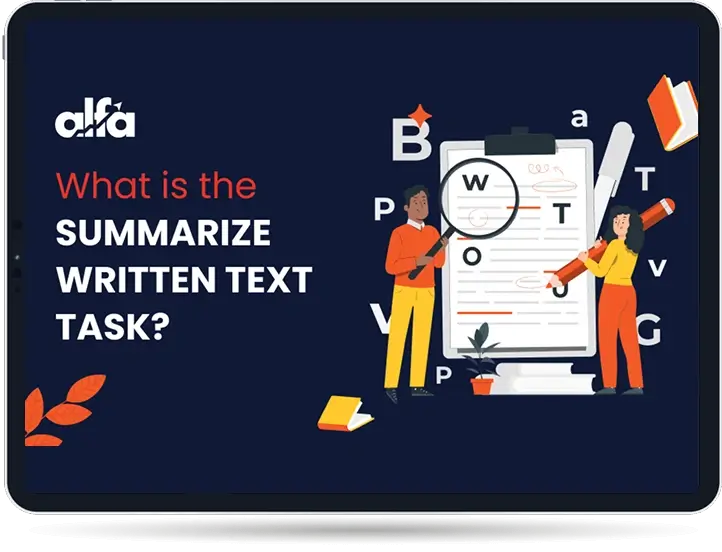
Tipi di brani nel compito Summarize Written Text PTE
L'obiettivo di ogni Summarize Written Text è riassumere un brano in una sola frase. Lo stile e il contenuto della frase possono variare. Conoscere il tipo di brano ti aiuterà a organizzare il riassunto e a individuare più rapidamente i punti chiave.

Brani Academic
Provengono da fonti accademiche o da studi scientifici. Di solito contengono idee e parole difficili da capire. Concentrati sull'individuare il punto principale dell'argomentazione o del risultato dello studio.
Esempio: storia, scienze e istruzione.

Testi di opinione
Questi brani sostengono una tesi o mostrano un punto di vista specifico. Per riassumere bene, cerca il punto di vista principale dell'autore e le prove che lo sostengono.
Esempio: problemi sociali, dibattiti politici e questioni ambientali.

Testi che descrivono o spiegano
Spiegano nel dettaglio un processo, un'idea o un evento. Individua qual è l'idea principale e come viene spiegata.
Esempio: fenomeni naturali, eventi storici e processi tecnologici sono alcuni esempi di argomenti.

Brani che confrontano o contrappongono
Questi testi trattano almeno due idee, teorie o sistemi affiancati. Fai attenzione alle principali differenze o somiglianze di cui si parla.
Esempio: modelli economici, pratiche culturali e teorie scientifiche.

Frasi di causa ed effetto
Spiegano che cosa è successo e perché. Assicurati di includere nel riassunto il principale rapporto di causa ed effetto.
Esempio: gli effetti del cambiamento climatico, il comportamento delle persone nella società e i progressi della medicina.

Summarize Written Text
In questo compito vedrai un testo sullo schermo. Devi leggere il testo ad alta voce in modo chiaro e naturale. Avrai 35 secondi per completare la reading, quindi concentrati su chiarezza, pronuncia corretta e un ritmo naturale.
Sample Question 1:

Sample Question 2:
Sample Question 3:

Consigli per riuscire nel compito di pratica PTE Summarize Written Text:

Prenditi il tuo tempo per la reading del brano:
Dedica un po' di tempo a comprendere l'idea principale e i dettagli importanti del brano. Una reading attiva ti aiuterà a capire che cosa vuole dire l'autore.
Annota subito i punti principali:
Presta attenzione all'inizio, alla fine e alle idee ripetute. Fissa nella mente le idee più importanti che vuoi includere nel riassunto.
Scrivi una sola frase chiara e sensata:
Devi riassumere tutto in una sola riga di 5-75 parole. Usa "which," "while," "as a result," o "however" per passaggi fluidi tra le idee.
Non includere dettagli piccoli o poco importanti:
Non cercare di toccare ogni punto. Attieniti all'idea principale e ai dettagli più importanti che la sostengono. Troppi dettagli possono rendere la frase lunga o confusa.
Controlla ortografia, grammatica e numero di parole:
Assicurati che maiuscole, punteggiatura e ordine della frase siano corretti. Controlla due volte che la riga finisca con un punto.
Come affrontare in modo efficace il Summarize Written Text nel PTE
Un metodo pianificato ti aiuterà a garantire che il riassunto sia corretto e preciso. Lavora sulla comprensione in reading, sul writing e sull'organizzazione delle frasi.
Strategia passo dopo passo

Non preoccuparti, leggi tutto:
Leggi tutto una volta per farti un'idea generale. Rileggi per trovare l'idea principale e i punti più importanti che la sostengono.

Concentrati sui punti principali:
Presta attenzione alle espressioni di transizione e alle frasi tematiche che indicano causa, contrasto o conclusione.

Prepara uno schema mentale:
Decidi che cosa conterrà la frase: l'idea principale e uno o due elementi di supporto importanti.

Scrivi una sola frase sensata:
Inizia dall'idea principale e usa i connettivi per collegare gli altri punti in modo sensato.
Esempio: Il brano afferma che l'esercizio fisico regolare fa bene alla salute mentale perché riduce lo stress e migliora l'umore, rendendo le persone complessivamente più sane.
Esempio: Il brano afferma che l'esercizio fisico regolare fa bene alla salute mentale perché riduce lo stress e migliora l'umore, rendendo le persone complessivamente più sane.

Rileggi prima di inviare:
Assicurati che rispetti il limite di parole (5–75 parole) e controlla grammatica, punteggiatura e leggibilità.
Leggendo diversi tipi di brani ed esercitandoti con regolarità, potrai sentirti più sicuro di ottenere un buon risultato nel compito Summarize Written Text, cosa che alla fine ti aiuterà a ottenere un punteggio più alto in PTE Academic, UKVI.
Leggendo diversi tipi di brani ed esercitandoti con regolarità, potrai sentirti più sicuro di ottenere un buon risultato nel compito Summarize Written Text, cosa che alla fine ti aiuterà a ottenere un punteggio più alto in PTE Academic, UKVI.
Utilizza il video completo per PTE Summarize Written Text


Scopri di più su altre PTE domande
La tua guida per ogni sezione dell'esame PTE

Speaking

Reading

Domande frequenti
Qui ci sono le risposte ad alcune domande frequenti.
Quante domande di Summarize Written Text possiamo aspettarci nell'esame PTE?

Ogni esame prevede uno o due compiti Summarize Written Text.
Quanto tempo ho per completare il compito Summarize Written Text?
Hai 10 minuti per farlo.
Nota: Questo è un compito indipendente, il che significa che finirlo più in fretta non cambia i tempi degli altri compiti. Per ottenere voti migliori, è sempre consigliato usare tutto il tempo per scrivere bene la risposta. Questo compito contribuisce sia a reading sia a writing, quindi vale parecchi punti.
Nota: Questo è un compito indipendente, il che significa che finirlo più in fretta non cambia i tempi degli altri compiti. Per ottenere voti migliori, è sempre consigliato usare tutto il tempo per scrivere bene la risposta. Questo compito contribuisce sia a reading sia a writing, quindi vale parecchi punti.
Quante frasi possiamo usare nel compito PTE Summarize Written Text?
Per questo compito si può usare una sola frase. Deve essere grammaticalmente corretta e riassumere in modo efficace tutte le informazioni importanti del brano proposto.
Posso modificare la mia risposta durante il compito PTE Summarize Written Text?
Durante il tempo a disposizione puoi apportare modifiche tutte le volte che vuoi.
Che impatto ha il compito PTE Summarize Written Text sul mio punteggio?
Questo compito influisce sia sulle competenze di reading sia su quelle di speaking, perché verifica quanto bene comprendi ciò che leggi e quanto bene scrivi.